


Blog
Fencing Lower Insurance Premiums for Commercial Properties
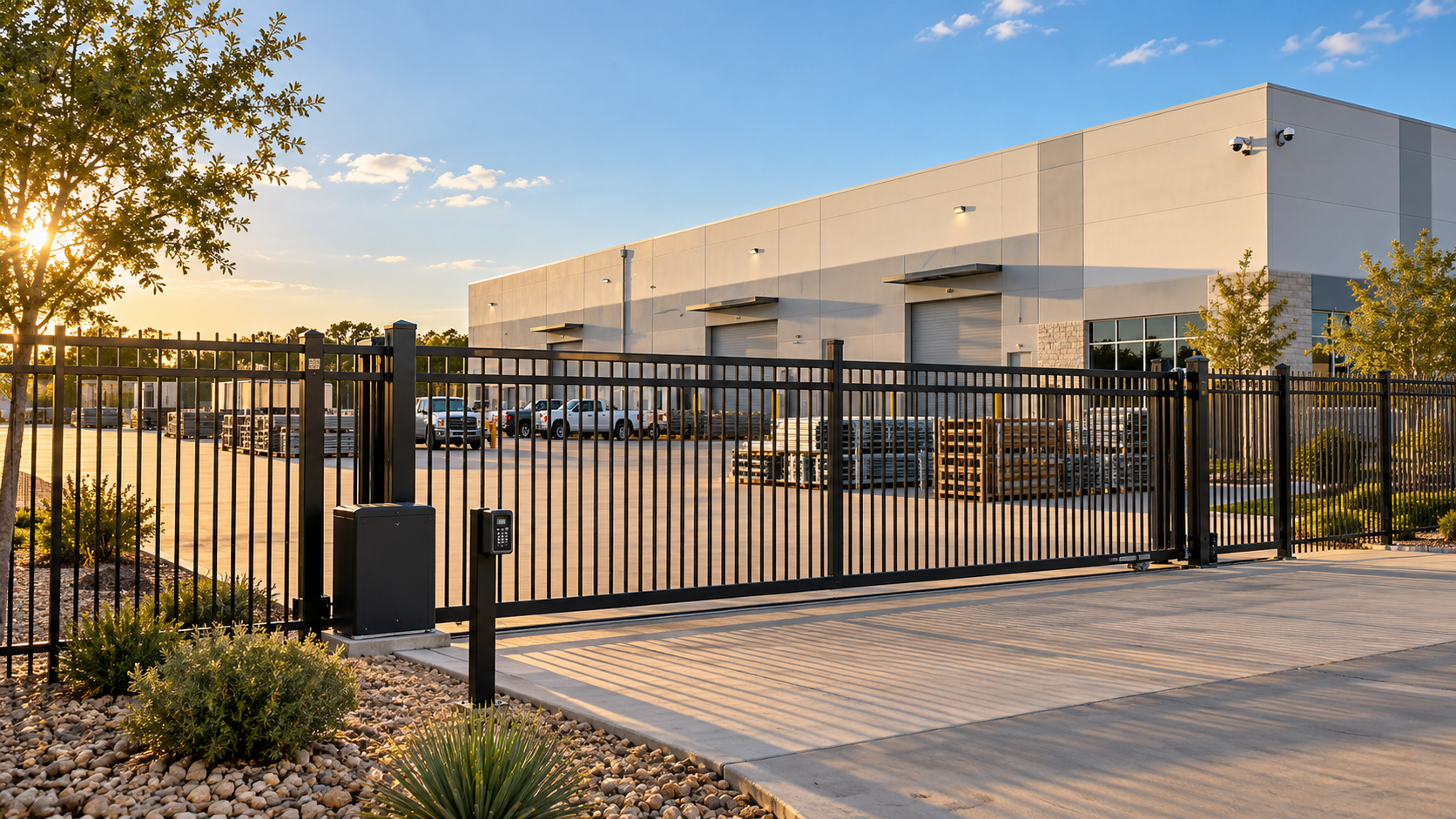
For commercial property owners in Austin, fencing can do more than establish boundaries. A well-planned fence can help protect outdoor equipment, discourage unauthorized access, and support a broader property security strategy. You may also want to discuss these improvements with your insurance provider.
However, installing a fence does not automatically qualify a business for lower insurance premiums. Any pricing benefit depends on the insurer, policy, property, and security measures in place. The best approach is to identify your property’s risks, ask your insurance agent which improvements matter, and design fencing to address those concerns.
How Commercial Fencing Supports Loss Prevention
Commercial properties often have valuable assets outside the main building. Work vehicles, tools, materials, and equipment may remain in storage yards or loading areas overnight. Without a controlled perimeter, these assets are easier to access and remove.
Security fencing adds a physical barrier and directs entry toward designated gates. It can also make property boundaries clearer and discourage casual trespassing.
Insurance companies recommend fencing, lighting, and video cameras to control unauthorized entry and deter business burglary and theft. This supports fencing’s role in loss prevention, though it does not guarantee an insurance discount.
For businesses evaluating commercial fencing options for protecting buildings and outdoor assets, the design should reflect what needs protection and how the property operates each day.
Lower Premiums and Lower Loss Costs Are Different Benefits
When owners talk about reducing insurance costs, they often mean paying a lower annual premium. That is one benefit to ask an insurer about, but fencing may offer another financial advantage: helping prevent losses that leave the business paying out of pocket.
For example, stolen equipment can mean a deductible, replacement expenses, and interrupted work. Even when insurance responds, a business may still face scheduling problems or costs outside its coverage.
A fence that helps prevent an incident can still be valuable even if the premium stays the same. Consider these potential savings alongside installation costs, maintenance, and daily operational benefits.
Avoid budgeting around an assumed discount. Ask your agent whether a proposed fence would affect pricing, satisfy an underwriting requirement, or simply strengthen the property’s loss-prevention measures.
Match the Fence to the Property’s Risks
A storage yard, office building, and retail property have different security needs. The right commercial fence should account for those differences.
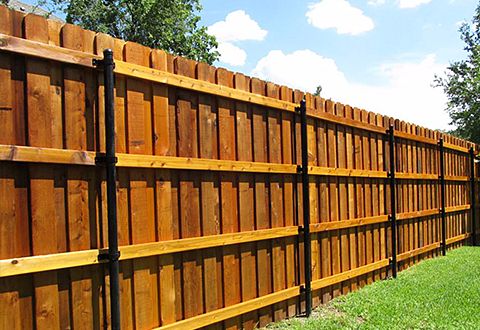
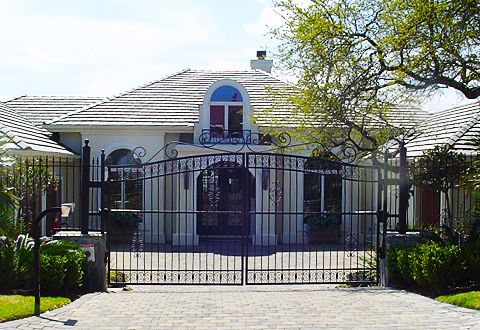
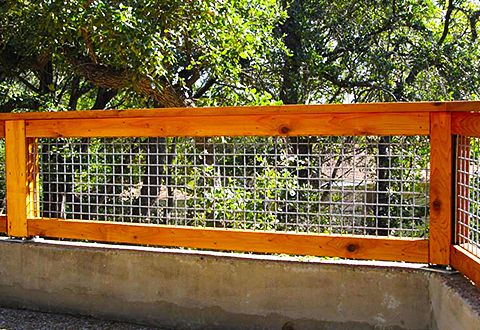
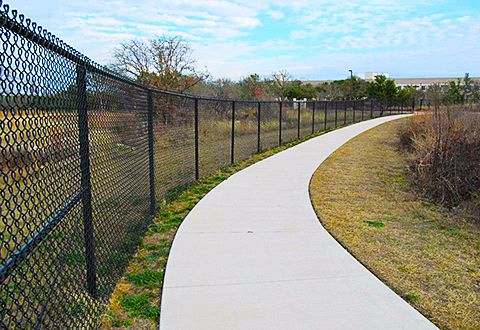
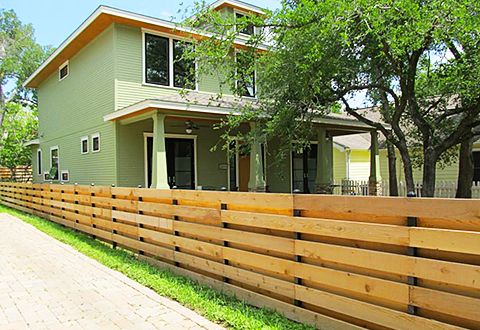
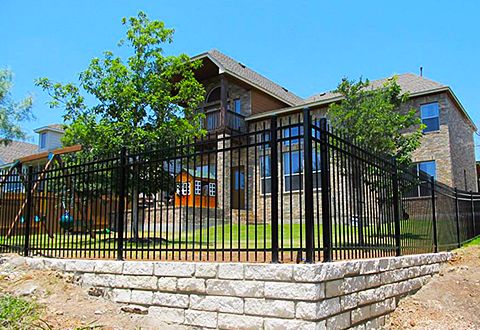
Chain link fencing can establish a perimeter around equipment yards and industrial properties while preserving visibility. Ornamental iron or steel fencing can combine a substantial boundary with an appearance suited to customer-facing locations. Privacy fencing can help screen stored materials, but it also changes what employees and cameras can see.
Fence height, openings, gate placement, and surrounding landscaping all influence performance. A strong fence with an unsecured gate or an overlooked gap may leave the property vulnerable.
Rather than choosing a material solely for a possible insurance benefit, select a design that addresses the site’s actual exposure.
Gates Make Access Control Practical
A perimeter fence works best when entrances are managed consistently. Gates left open after closing can undermine the purpose of the installation.
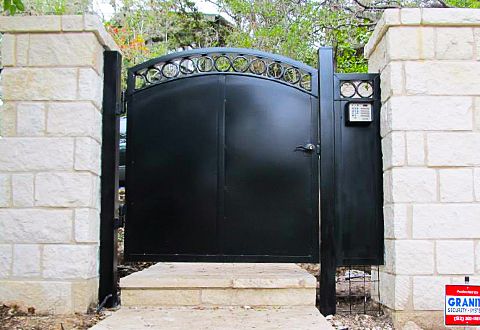
For properties with frequent deliveries or employee traffic, custom gate systems for managing commercial property access can make controlled entry more practical. Depending on the system, authorized users may enter through remotes, keypads, or other access controls.
The gate layout should accommodate delivery vehicles, daily traffic, and required access. An automated system also needs an appropriate operator, safety devices, and ongoing service.
Professional planning for electric gate opener installation and ongoing system maintenance helps owners consider these details before choosing equipment.
Combine Fencing With Other Security Measures
Fencing is most useful as part of a coordinated security plan. Lighting can improve visibility around entrances, while cameras can help monitor activity. Secure storage practices and clear closing procedures address risks a fence alone cannot resolve.
For example, a contractor’s yard might combine perimeter fencing, a controlled vehicle entrance, lighting, and locked tool storage. Each measure serves a different purpose.
Businesses considering integrating gate automation with monitoring and access controls should evaluate how the components work together and who will manage them.
Discuss the Project With Your Insurance Agent First
Before approving a fencing project, give your agent a description of the proposed improvements. Useful questions include:
- Would this fencing qualify for a credit or affect underwriting?
- Are there specific fence, gate, or access-control requirements?
- What documentation should we provide after installation?
- Does our policy cover the new fence and gate equipment?
Keep installation records, photographs, specifications, and maintenance information available for review. Confirm any insurance benefit directly with the carrier rather than relying on a general estimate.
Talk With Capitol Fence of Austin About Commercial Fencing
Capitol Fence of Austin helps businesses evaluate commercial fencing and gate options based on their property layout, security priorities, and desired appearance. Whether you manage an equipment yard, office property, or commercial facility, a carefully designed perimeter can help create a more controlled environment.
Call Capitol Fence of Austin at (512) 990-2530 to discuss your commercial fencing project, and consult your insurance agent about how the proposed improvements may affect your coverage and costs.
FAQs – COMMERCIAL FENCING & INSURANCE COSTS
Q: Can commercial fencing lower my business insurance premiums?
A: Commercial fencing may support an insurance review by helping control unauthorized access and protect property. However, a premium reduction is not guaranteed. Ask your insurance agent whether the proposed fencing qualifies for a credit or affects underwriting.
Q: What type of commercial fence is best for insurance purposes?
A: There is no single fence type that qualifies for savings across all insurers. The appropriate design depends on your property’s risks and any requirements established by your carrier. Chain link, ornamental metal, and privacy fencing serve different security and operational needs.
Q: Can an automatic gate help improve commercial property security?
A: An automatic gate can help manage vehicle access through designated entrances. Its effectiveness depends on proper installation, appropriate access controls, reliable closing procedures, and ongoing maintenance. Any insurance benefit must be confirmed with your carrier.
Q: Should I contact my insurance agent before installing commercial fencing?
A: Yes. Discuss the proposed fence and gate system before installation. Ask whether specific features are required, whether a credit is available, and what documentation the insurer needs to evaluate the improvements.
Q: What fencing documentation should I provide to my insurance company?
A: Your insurer may request installation invoices, photographs, fence and gate specifications, access-control details, and maintenance records. Ask your agent which documents are needed for your property and policy.
Q: Is commercial fencing worthwhile if my insurance premium stays the same?
A: Yes. Fencing can help discourage unauthorized entry, protect outdoor assets, and establish controlled access points. Preventing a loss may help a business avoid deductibles, replacement expenses, and operational disruption, even without a premium discount.
RECENT BLOG POSTS
Fencing Lower Insurance Premiums for Commercial Properties
METAL FENCING OPTIONS – IRON VS. ALUMINUM VS. STEEL

LATEST PROJECTS